Roof Leak Water Damage in Kennesaw, GA
The thunderstorm came through at four, the power flickered, and an hour later there was a brown ring on the bedroom ceiling that was not there at lunch. This site connects you by phone with an independent local provider who handles roof leak water damage in Kennesaw and across Cobb County.
Two trades, one wet ceiling: who does which part
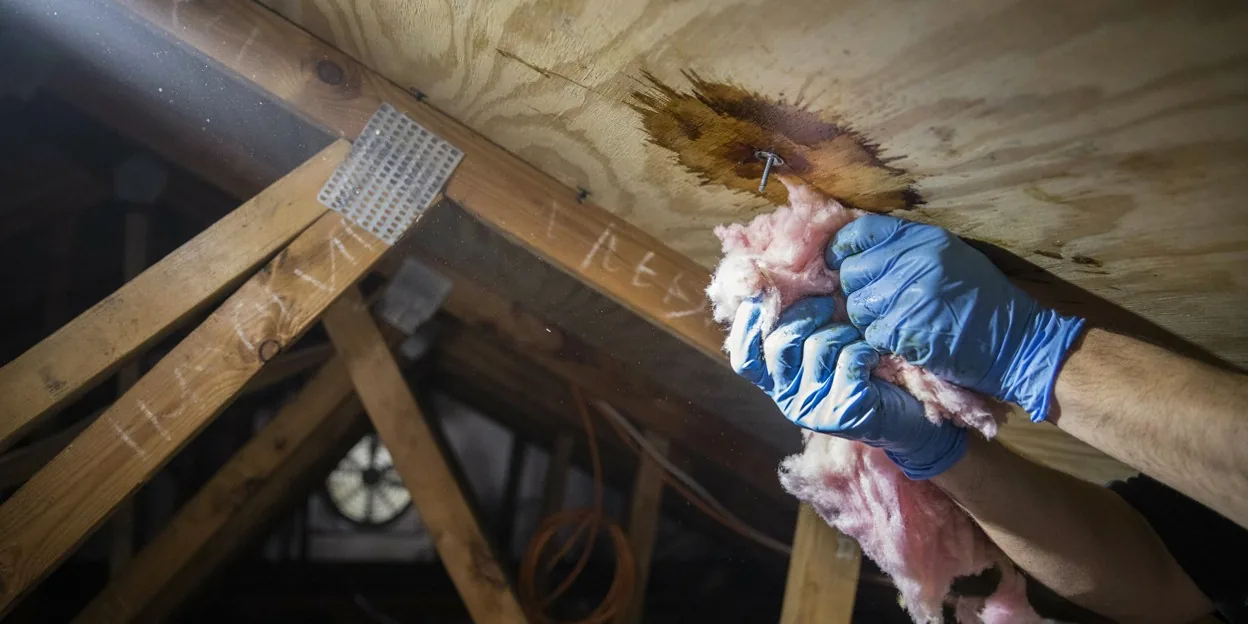
A roofer stops the rain from coming in. The provider deals with what the rain already reached, and the two jobs happen in that order. The crew goes into the attic first with a light and a meter, finds the wet insulation under the leak, and follows the water from there. On a Kennesaw two-story with a roof valley over the garage, the water often runs along a rafter or a truss chord for several feet before it drops, so the wet spot on the ceiling is rarely straight under the hole in the roof.
Then the ceiling drywall, the top plate of the wall below, and the wall cavity get read. Where the water followed a wall down, the readings continue to the floor.
Buckets, tarps, and the one thing not to do
Put a bucket under the drip and, if the ceiling is bulging, push a screwdriver through the low point so the water drains in one place instead of bringing the drywall down. Move furniture and electronics out from under it. Do not climb on a wet roof, and do not push up on a sagging ceiling to see how bad it is. If you can reach the attic safely, photograph the wet insulation from the hatch. Call the roofer for the tarp, and call here for the inside.
Attic insulation goes, rafters and ceilings mostly stay
Blown-in or batt insulation that got wet comes out. It holds water against the drywall below it and against the framing above it, and it never dries evenly. Rafters and ceiling joists dry in place. Ceiling drywall that sagged, cracked, or held a pool comes down; drywall with a stain and a dry reading can often be left, primed, and painted once the drying is done.
Where the leak ran down inside a wall, the bottom of that wall gets opened and dried with the same equipment as any structural drying job. Water that made it all the way to a hardwood floor is a water extraction question. And a leak that ran for weeks before anyone noticed, which happens with a slow drip at a plumbing vent boot, is a different scope from one storm's worth, so tell the crew when the stain first appeared.
Pop-up storms, Irma, and thirty-year-old shingles
Kennesaw's roofs take two kinds of weather. The first is the ordinary summer thunderstorm, which can drop two inches in an hour on a roof valley and drive rain sideways under a lifted shingle. The second is the tropical system that reaches this far inland every few years. On September 11, 2017, the remnants of Hurricane Irma crossed the metro with gusts in the 50 to 65 mile-per-hour range, took down thousands of trees across north Georgia, and left roofs open to the rain that followed. Trees on a wooded Cobb County lot are the usual reason a roof fails all at once.
The other reason is age. Subdivisions built in the late 1980s and 1990s are on their second roof now or overdue for it, and the flashing at a chimney, a skylight, or a wall-to-roof joint is where a thirty-year-old roof leaks first. Attics here also run hot and humid from June through September, which means wet insulation up there stays wet unless a dehumidifier is put to work on it.
Replacing the roof itself is the roofer's permit. A rebuild inside the house that replaces ceiling drywall or wiring goes through Kennesaw Building Services inside the city or Cobb County Community Development in the unincorporated area, and the provider pulls it when the rebuild needs one.
When you call about a leak from above
Have the address ready and say where the stain is, whether the ceiling is sagging, whether a roofer has tarped it yet, and how long ago the leak started. Mention a tree on the roof or a skylight nearby. Call (470) 574-4769.